What’s Better, A Real Or Artificial Christmas Tree? Choosing A Christmas Tree Tips
One of the main centrepieces of a modern Christmas is your tree. Do you have one main tree each year, or several through your home & in the garden? Why do we have a decorated tree at Christmas? What’s better, real or artificial Christmas trees? Read on to find out the origins of this heart-warming tradition and my top tips for choosing a Christmas tree which suits your home and family perfectly.

Why Do We Have Christmas Trees At Christmastime?
Origins of The Christmas Tree Tradition
 How did our festive tree tradition start? Pre-Georgian times, Christmas trees weren’t a ‘thing’ here in the UK at Christmas. Traditions at this time of year centred on pagan Yule celebrations: seasonal changes, saying farewell to one year and welcoming the new one just beginning. There was also the rising popularity of Christian themes such as the nativity, due to the Christian Church’s adoption of this particular time of year to commemorate the birth of Jesus Christ.
Queen Victoria and her husband Prince Albert are usually credited with making Christmas trees a popular tradition in the UK, brought over from Germany. Although they certainly helped popularise it, having a decorated fir tree at Christmas pre-dates Victorian times.
Our Christmas tree tradition did make it over to England from Germany, where Prince Albert was born. However, rather than the introduction being during Victorian times, Christmas trees came here in the Georgian period – when George III was King of England.
What’s Better, A Real Christmas Tree or Artificial?
To the crux of the festive matter: should you choose a real or artificial Christmas tree? Ultimately, of course, the choice is yours. Let’s have a look at the pros and cons of both artificial and real Christmas trees, so you’re perfectly placed to make the best decision for your home & family.
Real Christmas Trees
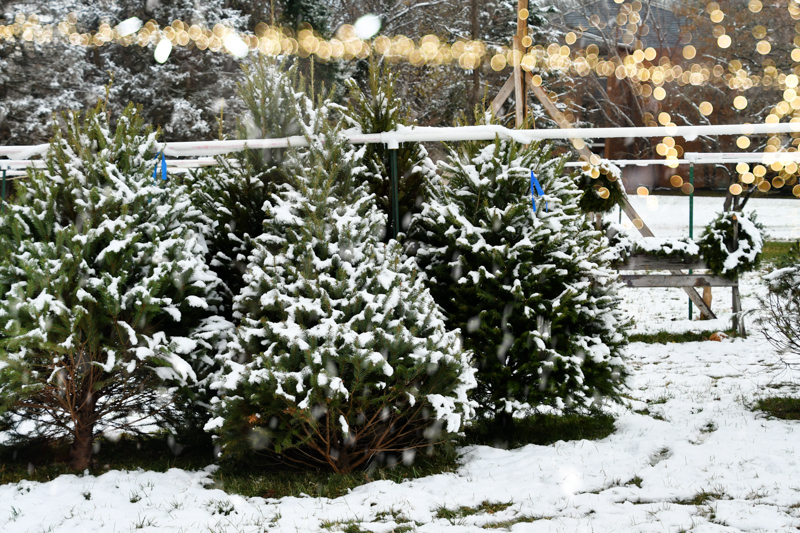
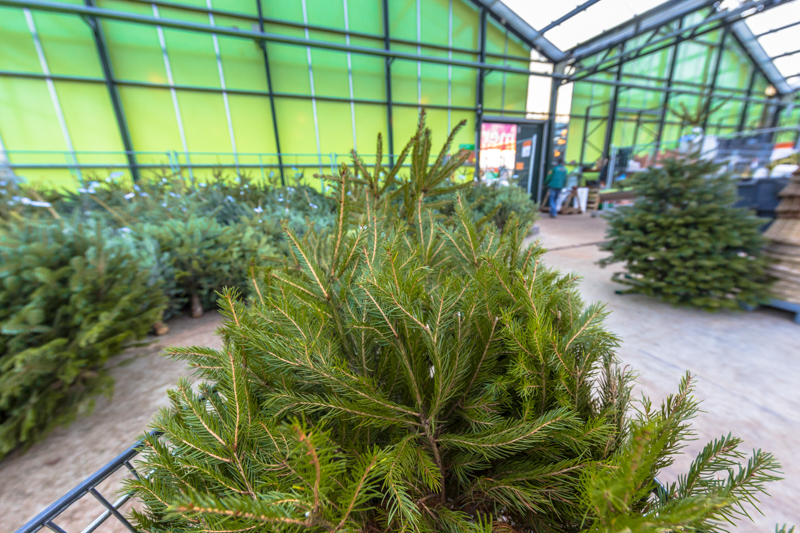
Real Christmas trees are fir trees, and the most common types are Balsam, Noble, Fraser & Nordmann fir, White, Blue & Norway Spruce and Lodgepole or White pine. Discover the many types of real Christmas tree at this handy website.
With regards size, the sky is (almost) the limit. Real trees have a possible maximum growth height of about 40m/130ft -but it’s unlikely you’ll want or need one that tall for your home!

Pros
Enjoy The Real Christmas Tree Scent
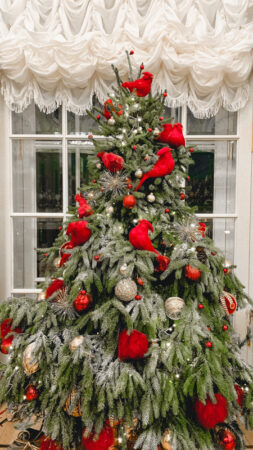 Real Christmas trees have an unmistakeable scent, which for many people is a large part of their Christmas tradition. Many can’t imagine decorating for and then celebrating Christmas without the scent of a real tree in the living room.
You Can Celebrate Nature Inside Your Home
Erecting a real Christmas tree in your lounge is a way of celebrating nature and placing it front and centre in your home at a time of year when you might not be out and about in nature as much as usual. Because the fir trees used for Christmas are evergreen, their presence is a glorious tribute to the wonder of nature.
Choosing Your Real Tree Together Is A Heart-Warming Family Tradition
Choosing your real Christmas tree together with your family each year is the stuff of Hallmark festive movies. For many, it’s the tradition of choosing a tree which marks the true start of Christmas. You can make a day of it; head to the Christmas tree lot, take your time choosing your family’s ‘perfect’ tree, take it home to cut free from the netting, pot and decorate, enjoy festive snacks like hot chocolate, mulled wine and mince pies while a Christmas movie or music is playing in the background.
Buying A Real Christmas Tree Supports A Local Business
When you go to buy a real Christmas tree each year, you’re supporting a local business. And don’t worry that you’re removing a tree from nature; Christmas trees sold through these businesses are grown and sold specifically for the Christmas season – they’re not unduly ‘ripped’ from natural environments. Christmas tree businesses ensure they maintain planting, growing and selling trees in a cyclic balance. Many are established family businesses which have been supplying their local communities with real Christmas trees for many years.

Cons
Real Trees Shed Their Needles
The main con people report about real Christmas trees is the fact they can shed their needles. This leads to additional clean-up in your living area at an already busy time of year. You can minimise the risk of needle shedding from your real tree by asking your supplier about species of trees which are less likely to suffer from ‘needle drop’. Also, don’t buy your tree too early in the season otherwise it will be more likely to shed needles and look ‘dead’ by Christmas Day.
They Require Potting & Watering
Unlike artificial trees which come with a stand and you ‘pop it up and forget about it’, real Christmas trees need quite a bit of TLC. When you first bring your real tree home, you’ll need to have a trunk-gripping stand ready, and ideally, a pot in which to place it. This means you can water your real Christmas tree to help it last through the season – it’s a real, living tree, after all, and will be thirsty in its new warm indoor home. Get more tips on keeping your tree fresh here.
You Need To Buy A New Tree Every Year
No matter how well you look after your real tree, it won’t last until the next season (well, unless you successfully replant it in your garden). That means you need to splash out on a new Christmas tree every single year. This is an additional cost that you will need to factor into your family’s Christmas budget.
You’re Limited To Natural Colours & Styles
Although there is a wide variety of species, greens, heights and widths of real Christmas trees, you are ultimately limited to whatever nature is able to produce. So if you’re after a rainbow-branch tree with perma-snowy tips and integral lighting, a real tree isn’t for you.
Purchase Date Is An Important Factor
If you buy your real tree too early, it may not look its best by Christmas Day. Leave it too late and you’ll have less choice at the Christmas tree lot. Therefore you need to consider when the ideal purchase date is for your real Christmas tree. Many families buy their real tree on the first weekend in December. When are you buying yours?
You Need To Dispose Of It Properly After Christmas
Unless you’re able to successfully move or plant your real tree in your garden after Christmas, you’ll need to think about what happens to it after the festivities end. Please don’t dump your old tree just anywhere; check with your local council about Christmas tree collections in the New Year, or where you’re able to take your old tree to be disposed of ethically and eco-consciously.
Artificial Christmas trees
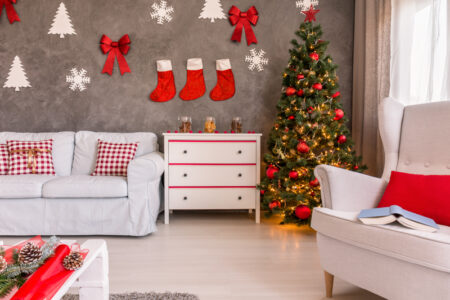
There are countless types and styles of artificial Christmas tree, so if you’re looking for something entirely different to standard this is probably the route for you. Artificial Christmas trees are available in traditional green fir style & colour but also in a whole host of dazzling colour combinations. These indoor-use trees usually range from 4 feet to a maximum of 12 feet in height. The most common choice is between 6 and 8 feet tall, to fit most living rooms.
Pros
There’s A Huge Range Of Sizes & Styles To Choose From
 When choosing an artificial Christmas tree, you have a wide range of sizes and styles to choose from to best fit your own style and living space. There are trees made to suit just about every taste, be it wide, short, tall, slim, just the top half of a tree or even flat-back trees to fit flush against a wall, perfect for more bijou spaces.
…And A Diverse Selection Of Colour Choices, Too
As well as a range of heights and widths of artificial Christmas trees, you have more choice in the colour department too. The diversity available these days is staggering, with trees in traditional greens with or without permanently snow-tipped branches, to black, white, blue, pink, rainbow… pretty much any colour you can imagine and wish for.
Some Artificial Trees Come Pre-Lit
Instead of a collective annual groan at having to untangle the Christmas lights (how do they manage to get so tangled when they’re just in storage?!), you could opt for an artificial Christmas tree which comes with integral lights. That’s right, you can erect the artificial tree, plug it in and ping! There you have it, a fully illuminated Christmas tree.
You Don’t Have To Worry About Needle Drop
Unlike real trees, artificial trees don’t shed their needles. Unless you have a particularly frenzied cat who takes a strong dislike to your tree of choice. You also (obviously) don’t need to pot, feed or water your artificial tree.
Using The Same Tree Yearly Makes It An Economical Investment
Because you bring out the same tree every year with an artificial type, it’s a sound investment and will help you keep control of the annual Christmas budget. You don’t have to worry about the additional expense that comes with shelling out for a new tree yearly. Therefore, it makes sense to choose wisely at the start so you can be sure you’ll still love your particular artificial tree year after year.
There Are No Restrictions On When You Can Put Your Tree Up
Fancy putting your tree up in all its glory mid-July? No problem, it’s guaranteed to look the same on Christmas Day*. Ok, perhaps that’s a little extreme – but you can put your artificial tree up just about whenever you like without any time restrictions or worry that it won’t look as spectacular come Christmas.
You Don’t Have To Worry About Tree Disposal After Christmas
No trips to the dump, no calling the council, no half-dead tree sat dejectedly on your freezing January pavement. Take down your artificial tree in your own time, store it in your tree box, put the decorations away carefully and you’re done.
Cons
There’s No Natural Christmas Tree Scent
Unlike a real tree, artificial trees don’t have that uniquely festive scent which permeates your living space and adds to the celebratory ambience of Christmas. That said, you could invest in some scented tree decorations like Scentsicles, or I love to light festive-scented Yankee candles through my home at Christmas.
You Need To Have Storage Space
Not everyone has the luxury of a loft or garage, and you do need somewhere to store that artificial Christmas tree through the year. When buying your tree, think about where you’re going to put it when it isn’t Christmas. Keep the box it came in (if you can fit it back inside after Christmas!) or buy a Christmas Tree storage box. Will it fit under your bed, on top of a wardrobe, in the garden shed? Make sure you store your tree somewhere safe and dry when it’s not in use, to maximise its longevity.
You’re Committed To The Same Tree Every Year
Instead of choosing a new style of tree every year, it will likely be the same tree you’re using year on year when you go the artificial tree route. After a while, you may find you’re getting bored of having the exact same tree every year. You can stave off the lessening wonder by changing up your decorations and colour theme, but you might still find yourself lusting after a different style at some point.
There’s No Annual Tree-Choosing Tradition
When you buy an artificial tree, you’re opting out of the annual real tree choosing tradition. No wandering around a tree lot with your family, deciding on your specific real tree which will make this Christmas particularly magical. That said, you can always make decorating your artificial tree the annual family tradition instead. As I mentioned with real trees earlier, you can put on some Christmas music or a favourite festive film, sip some warming mulled wine or hot chocolate, and enjoy trimming the tree top to bottom with your lights and decorations.


Have you decided yet? Will you choose a real tree, or an artificial one, this year? Once you’ve weighed up the pros and cons of each type above, you’re ready to shop. Don’t forget to measure how high your ceiling is, so you know the maximum height of the Christmas tree you’ll be purchasing.
This post contains affiliate links
*it may require a little dusting!